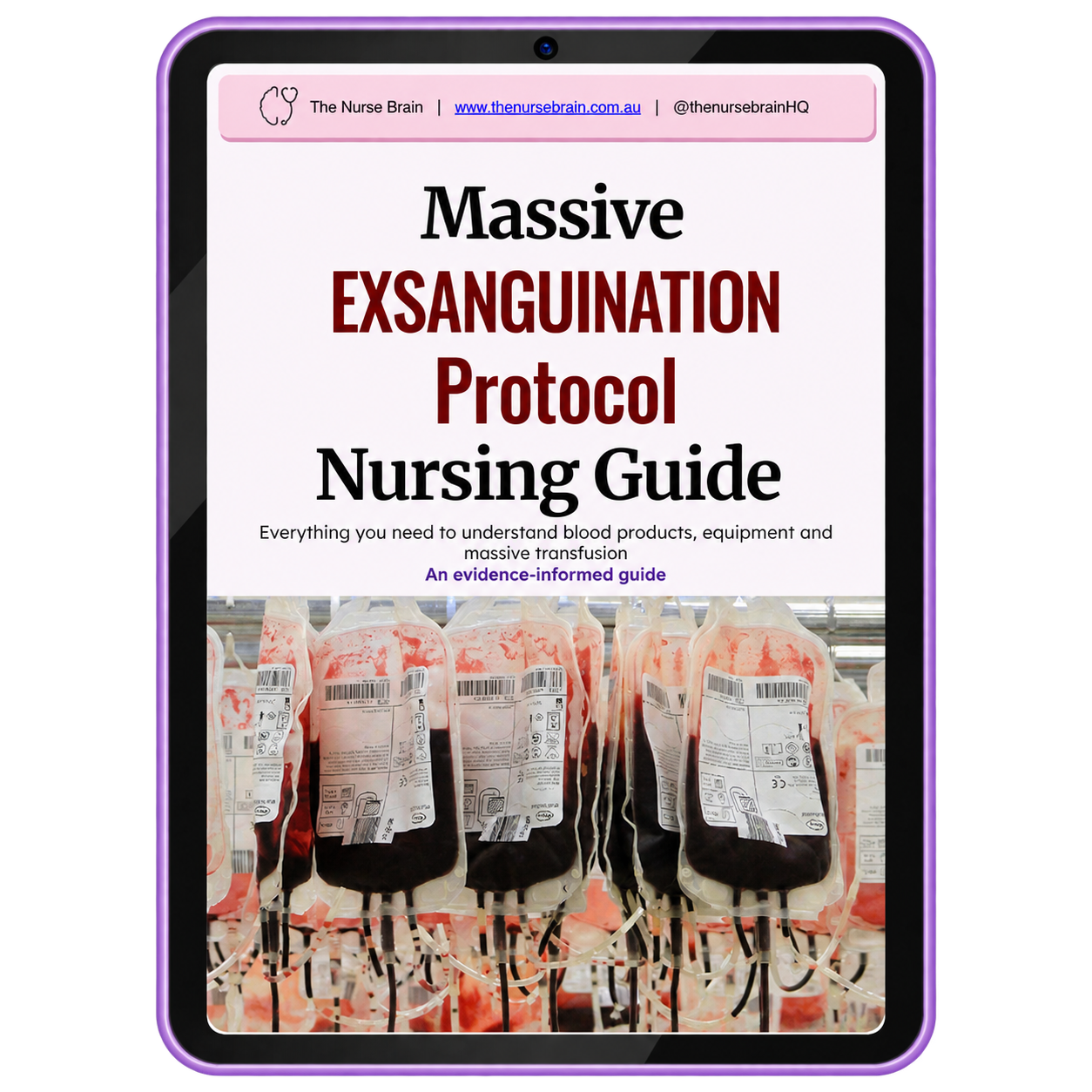
Understand what happens when major bleeding becomes a clinical emergency. The Massive Haemorrhage & MEP Guide breaks down the key components of massive haemorrhage management, connecting the blood products, equipment, physiology, investigations and clinical care involved during a massive transfusion.
Rather than simply listing what happens during an MEP, the guide explains why each component matters, helping you understand what is happening to the patient, what is being given, what needs to be monitored and the complications that can develop.
Massive Exsanguination Pack Guide
Understand what happens when major bleeding becomes a clinical emergency. The Massive Haemorrhage Guide breaks down the key components of massive haemorrhage management, connecting the blood products, equipment, physiology, investigations and clinical care involved during a massive transfusion.
The guide explains why each component matters, helping you understand what is happening to the patient, what is being given, how it’s given, what needs to be monitored and the complications that can develop.
What’s inside:
Recognising massive haemorrhage and understanding MEP activation
Blood products and their role in massive transfusion
IV access, administration equipment and rapid transfusion
The physiology behind complications during massive haemorrhage
Essential monitoring, blood tests and clinical interpretation
Managing coagulation and metabolic complications
Recognising transfusion-related complications
Practical nursing considerations throughout an MEP