What to Expect as a New Graduate Nurse
Starting as a new graduate nurse is a significant transition. Moving from a student role into full responsibility for patient care can feel both exciting and overwhelming. Expectations change quickly, and the level of accountability increases. Understanding what this transition involves can help reduce uncertainty and support a smoother adjustment to practice.
What you need to know
As a new graduate nurse, you are expected to practise as a registered nurse, not a student. This means you are accountable for your decisions, actions, and the care you provide, even while you are still developing confidence and experience.
Early on, it is normal to:
feel unsure when making clinical decisions
take longer to complete tasks
rely more on senior staff for guidance
need time to build confidence in prioritisation
You will still be supported, but the level of independence increases. You are expected to recognise when you need help and seek it appropriately.
Transitioning from student to graduate nurse can be a steep learning curve. The shift from being supervised to being accountable for your own patients can feel overwhelming at first. You are no longer observing or assisting, you are making decisions, prioritising care, and being relied on as part of the team. It is normal to feel unsure, take longer with tasks, and question your decisions. Confidence builds over time through experience, repetition, and reflection, not by knowing everything from the start.
Some practical tips to support you through your first year include:
ask questions early rather than waiting until you are unsure or overwhelmed
prioritise patient safety over trying to do everything quickly
take time to understand why you are doing something, not just how
use your nurse in charge and senior staff for guidance and support
reflect on your shifts to identify what went well and what you can improve
stay organised and plan your shift to help manage workload
escalate concerns early, even if you are not completely certain
be realistic with yourself, you are still learning
focus on gradual improvement rather than trying to be perfect
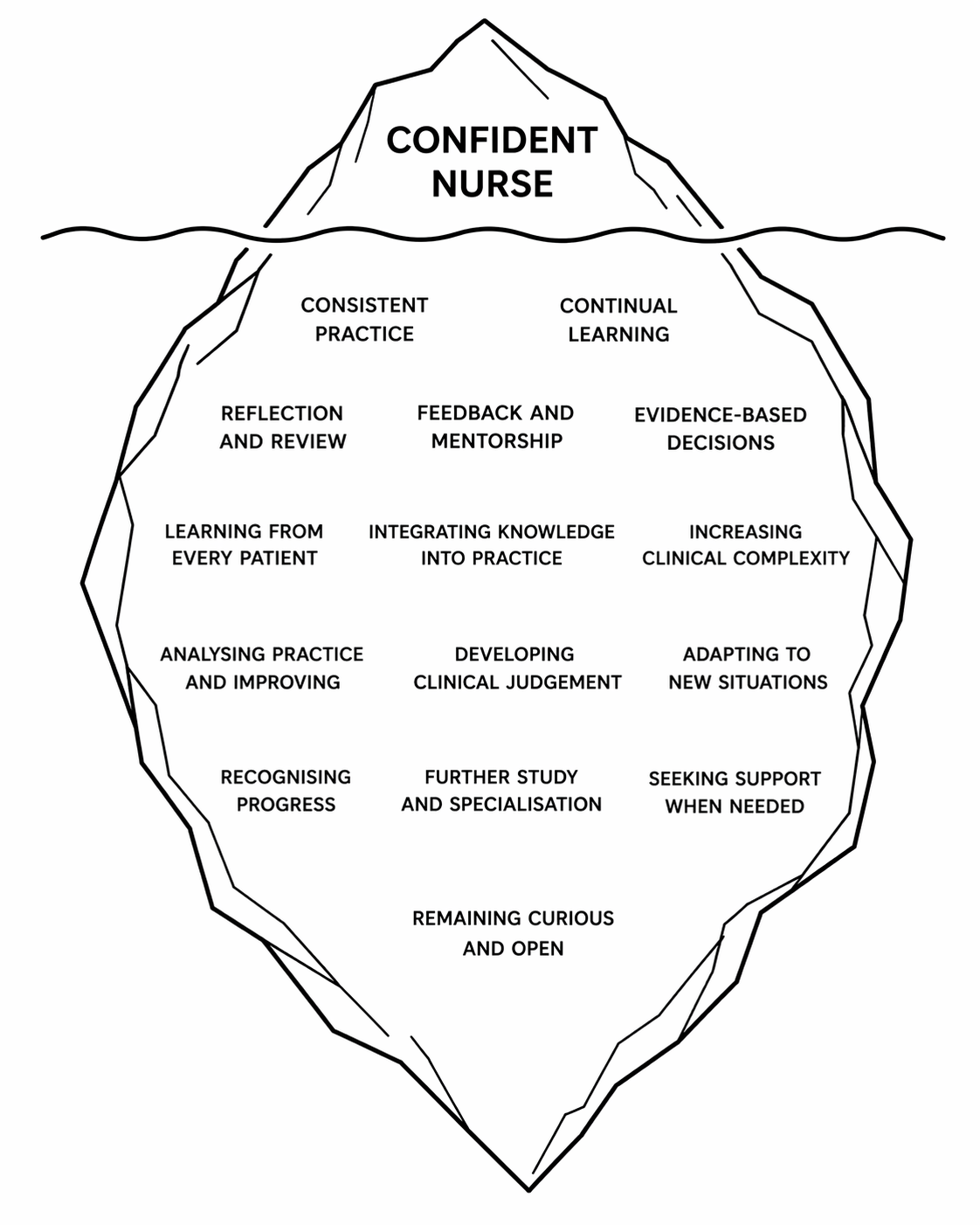
Confidence in nursing does not develop immediately, it builds over time through experience, practice, and reflection. With repeated exposure to clinical situations, decision-making becomes more familiar and confidence gradually strengthens.
Beyond the basics
The biggest shift as a new graduate is moving from task-based thinking to clinical reasoning. Instead of focusing on completing tasks, start asking: what is happening with this patient, what are the risks, and what needs to be done first? This shift takes time, but deliberately pausing to think through your decisions will help develop this skill faster.
Workload and time management can feel challenging early on, especially in high acuity and fast-paced clinical environments. At the start of each shift, take a few minutes to identify your highest-risk patients and any time-critical tasks. Reassess throughout the shift rather than trying to complete everything in order. Prioritisation improves when you actively decide what can wait, not when you try to do everything at once.
Many new nurses experience pre-shift anxiety, often described as a sense of dread or physical symptoms often associated with anxiety, such as heart palpitations, sweating or headaches. Pre shift anxiety can stem from fear of making errors, fear of the unknown or feeling pressure to perform well on every shift. Other factors which may contribute to pre shift anxiety may include a high workload or fast-paced environment, feeling unsupported and recognising your own limitations in experience.
Some tips to help manage pre shift anxiety include:
arrive a little early so you’re not feeling flustered when you begin patient care
use a shift planner to keep track of patient care and tasks
refrain from negative self talk, such as “I can’t do this”, “I’m not capable of this”
identify who you will seek support or guidance from on each shift
ask questions when you’re feeling unsure or need clarification
use deep breathing to slow your heart rate and calm your nervous system
consider therapy or counselling to help process stress
tell the nurse you’re working with you feel nervous or anxious
Pre-shift anxiety is common, but that does not mean it is something you have to just accept or manage on your own. Feeling nervous before a shift may be shared by others, but if it is persistent, overwhelming, or affecting your ability to function, it is important to seek support.
Speaking with a senior nurse, educator, or a trusted colleague can help put concerns into perspective and provide practical strategies. Support services are also available in many workplaces, such as debriefing and free counselling services. Just because something is common does not mean it should be ignored, and early support can make a significant difference.
In practice
In your day-to-day work, the role of a new graduate nurse involves balancing patient care, communication, and decision-making. Each shift requires ongoing assessment, prioritisation, and follow-up.
In practice, this may involve:
planning care for multiple patients at the start of a shift
reassessing patients regularly and responding to changes
communicating with the nurse in charge and medical team
documenting care and clinical findings accurately
escalating concerns when a patient’s condition changes
You won’t be on your own, your first shift will likely be orientation and the shifts over the first week or few weeks will likely be supernumerary, where you shadow an experienced nurse. You will not be expected to manage everything independently from the start. Support from senior nurses, educators, and the wider team is part of the transition. However, you are expected to take responsibility for your patients and actively engage in decision-making.
Over time, tasks that initially feel difficult will become more familiar. Prioritisation will improve, and clinical reasoning will develop. The focus is not on being perfect, but on practising safely, learning consistently, and building confidence through experience.
Where to From Here?
🔗Visit the Resources page to access a free printable shift planner to help plan patient care.