Acid Mantle & Barrier Function
The skin’s ability to act as a protective barrier is central to maintaining homeostasis. Among the key features that support this barrier function is the acid mantle, a thin acidic film on the surface of the stratum corneum. This acidic environment works in concert with the physical barrier of keratinised cells, lipid matrices and tight junctions, and the immunological barrier of antimicrobial peptides and resident immune cells. These systems defend the body against pathogens, prevent transepidermal water loss, regulate microbial populations on the skin and maintain optimal enzymatic activity for epidermal turnover.
What You Need to Know
The skin’s barrier function depends on both chemical and physical defences that work together to protect the body from water loss, microbial invasion, and environmental damage. The acid mantle is a thin, slightly acidic film on the skin surface formed from a combination of sebum, sweat, natural moisturising factors, and epidermal lipids. Its acidic pH, typically between 4.5 and 5.5, inhibits the growth of pathogenic organisms while supporting a stable population of commensal microbes.
Several components contribute to maintaining an effective acid mantle and surface barrier:
Sebum and sweat, which help establish an acidic surface environment
Natural moisturising factors derived from keratin breakdown
Epidermal lipids that support cohesion of the outer skin layers
Beneath the acid mantle, the physical barrier of the skin is provided by the stratum corneum. This layer is composed of flattened, non-viable keratinocytes embedded within a lipid-rich matrix, often described as a “brick and mortar” structure. This organisation limits transepidermal water loss and forms a resilient shield against chemical, physical, and microbial threats. When the acid mantle or stratum corneum is disrupted by factors such as harsh cleansing agents, low humidity, repeated friction, disease, or injury, barrier function is compromised. The result is increased water loss, heightened skin sensitivity, and greater susceptibility to irritation, inflammation, and infection.
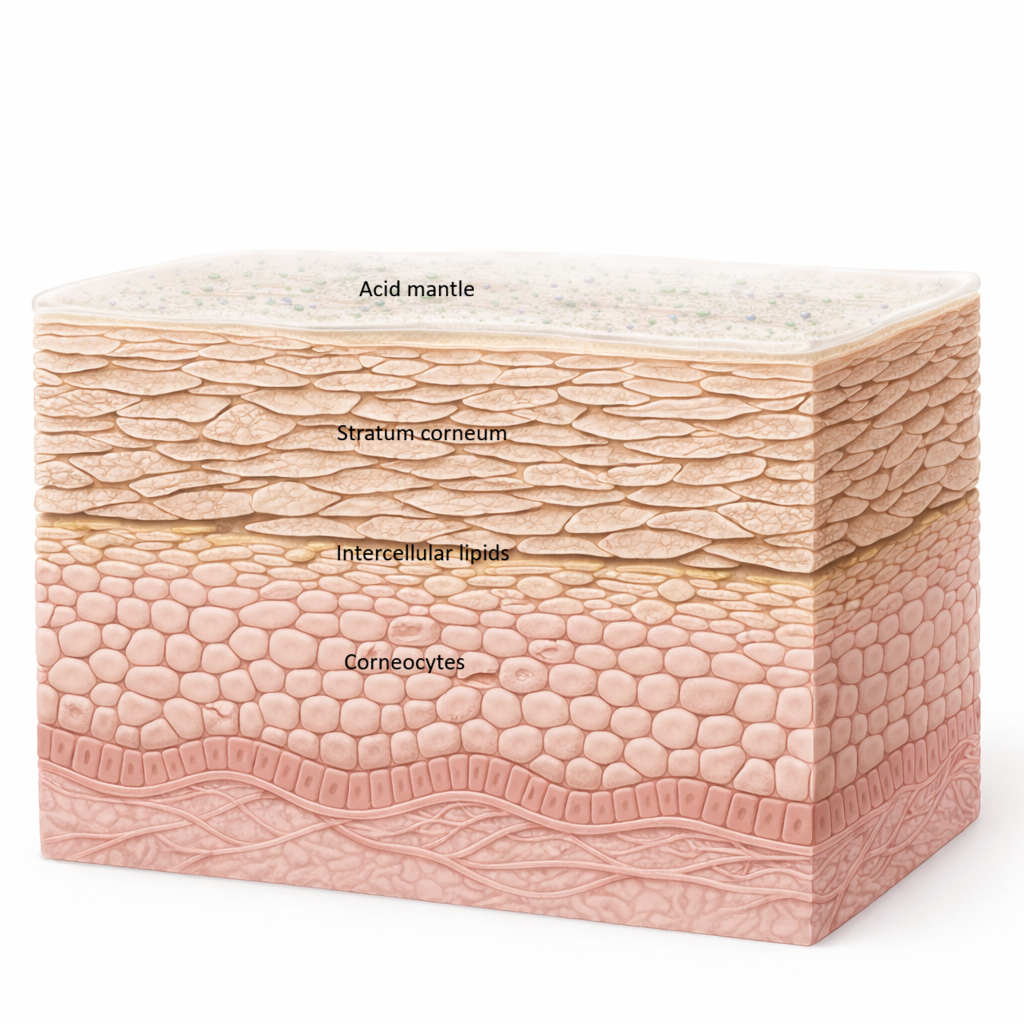
Image: The skin’s outer barrier consists of the acid mantle and stratum corneum, supporting barrier function, hydration, and microbial defence.
Beyond the Basics
Composition and formation of the acid mantle
The acid mantle is created through the combined action of sebaceous secretions, sweat, and intracellular products released during keratinocyte differentiation. Sebum contributes free fatty acids that lower surface pH, while eccrine sweat adds lactic acid and amino acids that further acidify the skin surface. Within the epidermis, breakdown of filaggrin during terminal keratinocyte differentiation generates natural moisturising factors such as pyrrolidone carboxylic acid and urocanic acid. These molecules not only attract and retain water within corneocytes but also contribute directly to surface acidity.
This acidic environment is functionally important rather than incidental. Many enzymes responsible for lipid processing, corneocyte cohesion, and desquamation operate optimally within a narrow acidic pH range. By maintaining this environment, the acid mantle supports orderly barrier formation, regulates microbial growth, and stabilises the outermost layers of the epidermis.
The stratum corneum as a physical barrier
The physical barrier of the skin is provided by the stratum corneum, a highly specialised structure composed of terminally differentiated keratinocytes embedded within a lipid-rich extracellular matrix. This organisation is often described conceptually as a “brick and mortar” arrangement, where corneocytes form rigid structural units and extracellular lipids hold the layers together. The resulting architecture creates a hydrophobic barrier that limits transepidermal water loss and restricts penetration of irritants, allergens, and microorganisms.
Despite its apparent rigidity, the stratum corneum is a dynamic tissue. Corneocytes are continuously shed and replaced, and their cohesion is regulated by enzymatic processes that control both lipid organisation and cell separation. These enzymes are pH dependent, linking the integrity of the physical barrier directly to maintenance of the acid mantle. When surface pH rises, enzymatic activity becomes dysregulated, leading to impaired cohesion, increased water loss, and barrier fragility.
Lipid matrix and hydration control
The extracellular lipid matrix of the stratum corneum is essential for maintaining hydration and mechanical resilience. Ceramides provide structural stability, cholesterol contributes rigidity and flexibility, and free fatty acids support barrier cohesion and antimicrobial defence. Together, these lipids form lamellar bilayers that seal the spaces between corneocytes and prevent excessive water loss.
Within corneocytes, natural moisturising factors bind water and maintain intracellular hydration. When NMF production is reduced, the stratum corneum becomes dry, brittle, and prone to cracking. Many inflammatory skin conditions, including atopic dermatitis and psoriasis, are associated with disrupted lipid composition or impaired filaggrin processing, leading to chronic barrier dysfunction and increased sensitivity to environmental triggers.
Antimicrobial protection and immune interaction
The acidic pH of the skin surface plays a central role in antimicrobial defence. Many pathogenic organisms grow poorly in acidic conditions, while commensal species are adapted to survive and thrive in this environment. This selective pressure helps maintain a stable microbial community that protects against colonisation by harmful bacteria.
In addition to pH effects, sweat and sebum contain antimicrobial peptides such as dermcidin, LL-37, and beta-defensins. These peptides disrupt microbial membranes, inhibit fungal growth, and modulate local immune responses. The combined action of acidity, lipids, and antimicrobial peptides creates a highly effective chemical barrier that works in parallel with the physical structure of the stratum corneum.
Barrier repair and homeostatic regulation
When the skin barrier is disrupted by abrasion, inflammation, chemical exposure, or mechanical stress, repair mechanisms are rapidly activated. Keratinocytes increase lipid synthesis and reorganise lamellar structures to restore barrier integrity. Successful repair depends on an appropriate pH environment, as lipid-processing enzymes require acidity to function effectively.
During wound healing, keratinocyte migration across the wound surface occurs only when the environment remains moist and biochemically balanced. Disruption of surface pH through alkaline cleansers, harsh surfactants, or prolonged occlusion can delay repair by impairing enzyme activity and lipid organisation. This highlights the importance of preserving both chemical and physical aspects of the barrier during recovery.
Factors that disrupt barrier function
Barrier integrity can be compromised by a range of internal and external influences. Repeated exposure to alkaline soaps and detergents raises surface pH and strips protective lipids, while low humidity and environmental dryness increase water loss. Mechanical friction, ageing-related reductions in lipid and NMF production, and psychological stress further weaken barrier resilience. In conditions such as atopic dermatitis, genetic defects in filaggrin processing and lipid synthesis create a chronically impaired barrier that is prone to inflammation and infection.
These disruptions increase transepidermal water loss, heighten skin sensitivity, and reduce antimicrobial protection. Understanding how these factors interact with acid mantle chemistry and stratum corneum structure is essential for explaining why barrier failure leads to irritation, inflammation, and recurrent skin disease.
Clinical Connections
Barrier dysfunction underlies many common dermatological conditions because disruption of the acid mantle and stratum corneum alters hydration, microbial balance, and inflammatory control. When the barrier fails, the skin becomes more permeable to irritants and pathogens, and normal repair mechanisms are less effective. Clinical presentations often reflect the specific way barrier integrity has been compromised rather than a single isolated defect.
In practice, barrier dysfunction most commonly presents through the following patterns:
Impaired lipid organisation and elevated skin pH
Abnormal keratinocyte turnover and barrier renewal
Reduced resilience to mechanical stress and moisture imbalance
Atopic dermatitis is a clear example of barrier failure driven by reduced ceramide content, impaired filaggrin processing, and an abnormally elevated skin pH. These changes weaken cohesion within the stratum corneum, increase transepidermal water loss, and allow greater penetration of allergens and microbes, contributing to chronic inflammation and recurrent infection. Psoriasis, by contrast, is characterised by accelerated keratinocyte proliferation and incomplete barrier maturation, producing thickened plaques that paradoxically coexist with impaired barrier function and increased sensitivity.
Barrier impairment also has important implications in ageing and metabolic disease. In older adults, reduced lipid production and natural moisturising factors contribute to dry, itchy skin and increased vulnerability to friction, shear, and pressure-related injury. In diabetes, altered sebum production, microvascular changes, and impaired lipid synthesis weaken barrier resilience and delay repair, increasing the risk of skin breakdown and infection, particularly in the lower limbs.
Maintaining or restoring the acid mantle is therefore central to effective skin care and wound prevention. Clinical decisions around cleanser selection, moisturisation strategies, and dressing choice can either support or hinder barrier recovery. Products that preserve acidity, replenish lipids, and minimise mechanical disruption help restore barrier integrity, reduce inflammation, and lower infection risk across acute, chronic, and community care settings.
Concept Check
How does the acid mantle help regulate the skin microbiome?
Why is the lipid matrix of the stratum corneum essential for preventing water loss?
How does filaggrin contribute to both hydration and acidity within the stratum corneum?
Why do alkaline soaps disrupt barrier function more than acidic cleansers?
What mechanisms enable the skin to repair its barrier after disruption?