PREGNANCY PHYSIOLOGY (MATERNAL ADAPTATIONS)
Pregnancy triggers one of the most profound physiological transformations in the human body. Maternal organ systems undergo coordinated adaptations to support fetal growth, prepare for labour and protect the health of the mother throughout gestation. These changes are not pathological; they are carefully regulated, dynamic processes driven by hormonal, cardiovascular, respiratory, renal, metabolic and musculoskeletal adjustments. Understanding maternal adaptations is essential for interpreting clinical findings during pregnancy, differentiating normal vs abnormal symptoms and providing holistic care to pregnant patients. These changes begin early in gestation, intensify through the second and third trimesters and reverse gradually postpartum.
What You Need to Know
Pregnancy is accompanied by widespread physiological adaptations across nearly every organ system, driven by the need to support fetal growth while maintaining maternal homeostasis. These changes begin early in the first trimester and intensify as pregnancy progresses, reflecting coordinated responses rather than isolated adjustments. Many adaptations are mediated by placental hormones and altered cardiovascular dynamics, allowing the maternal body to meet increased metabolic, circulatory, and oxygen demands.
The cardiovascular system undergoes some of the most pronounced changes. Maternal blood volume expands substantially, cardiac output increases, and systemic vascular resistance falls, all of which work together to ensure adequate uteroplacental perfusion. Respiratory adaptations occur in parallel, with increased tidal volume and minute ventilation enhancing oxygen delivery to both mother and fetus. Renal function also changes, with increased renal blood flow and glomerular filtration supporting waste removal and contributing to plasma volume expansion. Key systemic adaptations include:
Increased blood volume and cardiac output, supporting placental circulation and fetal oxygenation
Enhanced respiratory ventilation, improving oxygen uptake and carbon dioxide clearance
Altered renal function, increasing fluid retention and metabolic waste excretion
Hormonal influences underpin many non-cardiovascular changes. Placental hormones modify maternal metabolism to prioritise nutrient availability for the fetus, while progesterone and relaxin affect smooth muscle tone and connective tissue integrity. Gastrointestinal motility slows, ligamentous laxity increases, and immune function shifts toward tolerance rather than rejection of the fetus. As a result, common experiences such as breathlessness, dependent oedema, urinary frequency, reflux, and postural changes are usually expressions of normal physiological adaptation.
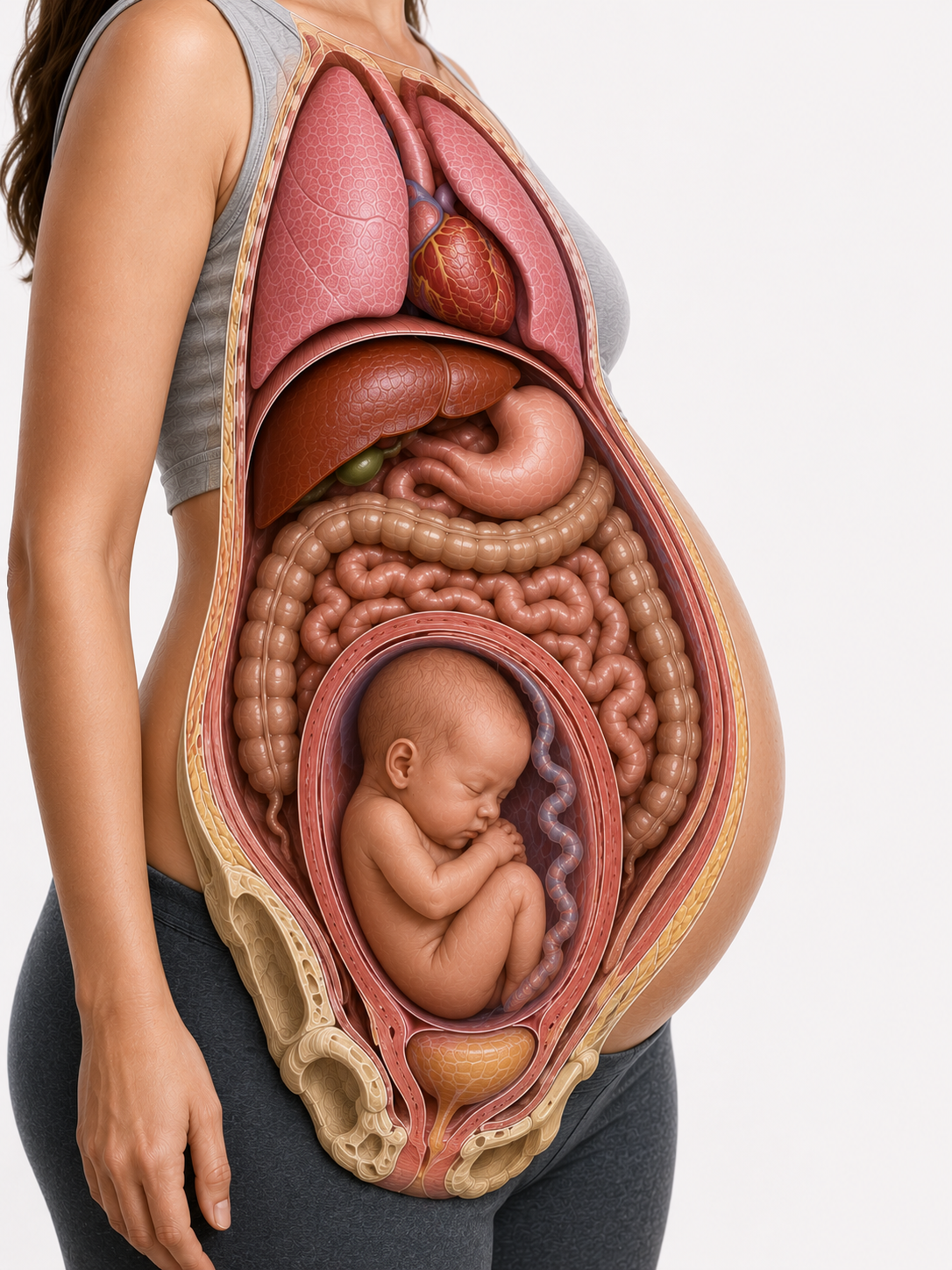
Image: Organ displacement during pregnancy
As the uterus enlarges throughout pregnancy, it progressively displaces surrounding organs upward, outward, and laterally within the abdominal and pelvic cavities.
Diaphragm: Elevated by the growing uterus, which can contribute to a sensation of shortness of breath, particularly in late pregnancy.
Lungs: Compressed by the elevated diaphragm, reducing some lung volumes while maintaining adequate oxygenation in healthy pregnancies.
Heart: Shifted upward and slightly to the left as the diaphragm rises.
Stomach: Displaced upward and compressed, increasing the risk of gastro-oesophageal reflux and heartburn.
Liver and gallbladder: Elevated by the expanding uterus, particularly on the right side.
Small and large intestines: Displaced upward and to the sides of the abdomen, which may contribute to bloating and constipation.
Kidneys and ureters: Experience physiological changes during pregnancy, including ureteric dilatation, which may increase the risk of urinary stasis.
Bladder: Compressed by the uterus, contributing to urinary frequency and urgency.
Pelvic floor structures: Subjected to increasing pressure as pregnancy progresses.
Note: This image is a simplified educational illustration designed to demonstrate the general pattern of organ displacement during pregnancy. Exact organ positions and the degree of displacement vary between individuals and throughout gestation.
Beyond the Basics
Cardiovascular Adaptations
Maternal blood volume expands by approximately 40–50% during pregnancy, with plasma volume increasing proportionally more than red blood cell mass. This phenomenon, known as physiological haemodilution, contributes to lower haemoglobin concentrations despite an overall increase in circulating erythrocytes. Although sometimes referred to as the physiological anaemia of pregnancy, this adaptation improves uteroplacental perfusion by reducing blood viscosity and provides a protective reserve against the blood loss associated with childbirth. Cardiac output increases by 30–50%, driven by both an increase in stroke volume (the amount of blood ejected with each heartbeat) and maternal heart rate. Simultaneously, systemic vascular resistance decreases due to the vasodilatory effects of progesterone, nitric oxide, and placental hormones, contributing to the reduction in blood pressure commonly observed during early pregnancy. As the uterus enlarges, compression of the inferior vena cava in the supine position may impair venous return, resulting in supine hypotensive syndrome, characterised by dizziness, pallor, nausea, diaphoresis, and hypotension. Positioning the pregnant individual in the left lateral position alleviates this compression and improves cardiac output.
Respiratory Adaptations
Progesterone stimulates the respiratory centre within the medulla, increasing sensitivity to carbon dioxide and promoting deeper breathing. As a result, tidal volume and minute ventilation increase throughout pregnancy, producing a mild, compensated respiratory alkalosis. Respiratory alkalosis refers to a reduction in arterial carbon dioxide levels resulting from increased ventilation. This adaptation facilitates the transfer of carbon dioxide from the fetal circulation to the maternal circulation across the placenta, optimising fetal gas exchange. Although the diaphragm elevates by approximately 4 cm as the uterus expands, widening of the thoracic cage helps preserve lung capacity. Many pregnant individuals report breathlessness despite normal oxygen saturation, a phenomenon known as physiological dyspnoea. This sensation reflects altered respiratory mechanics and increased ventilatory drive rather than impaired oxygenation, although sudden onset dyspnoea or associated chest pain should always prompt further assessment.
Renal Adaptations
Renal blood flow and glomerular filtration rate (GFR) increase by up to 50% during pregnancy, enhancing the clearance of maternal and fetal metabolic waste products. GFR describes the volume of plasma filtered by the kidneys each minute. As filtration increases, serum urea and creatinine concentrations decline, meaning values considered normal outside pregnancy may warrant investigation in a pregnant individual. Progesterone-mediated relaxation of smooth muscle contributes to dilation of the renal pelvis and ureters, while mechanical compression from the enlarging uterus further slows urinary flow. This urinary stasis increases susceptibility to urinary tract infections and pyelonephritis. Increased glucose filtration may exceed the kidneys' capacity for reabsorption, resulting in physiological glycosuria, which can occur in the absence of diabetes and should be interpreted within the broader clinical context.
Metabolic and Endocrine Adaptations
Pregnancy alters maternal metabolism to prioritise a continuous nutrient supply to the developing fetus. Human placental lactogen (hPL), sometimes described as a diabetogenic hormone, promotes progressive insulin resistance by reducing maternal sensitivity to insulin. This preserves maternal glucose for fetal use while increasing reliance on fat metabolism as an alternative energy source. Early pregnancy favours energy storage through increased fat deposition, whereas later pregnancy shifts towards lipolysis to meet rising metabolic demands. While these adaptations support fetal growth, excessive insulin resistance may contribute to the development of gestational diabetes in susceptible individuals. Endocrine changes also influence thyroid function, with increased thyroid-binding globulin concentrations elevating total thyroid hormone levels despite relatively stable free hormone concentrations.
Musculoskeletal Adaptations
Relaxin, progesterone, and oestrogen contribute to increased ligamentous laxity and softening of connective tissues, particularly within the pelvis. Although these changes facilitate childbirth by increasing pelvic flexibility, they may reduce joint stability and contribute to pelvic girdle pain. As pregnancy progresses, the enlarging uterus shifts the centre of gravity anteriorly, resulting in compensatory lumbar lordosis, an exaggerated inward curvature of the lumbar spine. Combined with increased abdominal mass, these postural adaptations place additional strain on the lower back and pelvic musculature, potentially altering gait mechanics and increasing musculoskeletal discomfort.
Gastrointestinal and Haematological Adaptations
Progesterone decreases gastrointestinal smooth muscle tone, slowing gastric emptying and intestinal transit. Reduced lower oesophageal sphincter tone, combined with increased intra-abdominal pressure from the enlarging uterus, contributes to gastro-oesophageal reflux, while slower bowel motility predisposes pregnant individuals to constipation and bloating. Pregnancy is also characterised by a hypercoagulable state, involving increased concentrations of clotting factors and reduced fibrinolytic activity. This adaptation reduces the risk of haemorrhage during childbirth but simultaneously increases the risk of venous thromboembolism (VTE). Pregnancy therefore represents an important VTE risk factor, particularly in the presence of prolonged immobility, obesity, thrombophilia, or caesarean birth.
Immune Adaptations
Pregnancy does not represent a state of global immunosuppression. Instead, the maternal immune system undergoes selective immune modulation, allowing tolerance of the genetically distinct fetus while maintaining protection against infection. This balance is achieved through complex interactions between innate and adaptive immune responses that reduce the likelihood of fetal rejection without completely suppressing maternal immunity. These changes may alter susceptibility to specific infections and influence the course of autoimmune conditions, with some improving during pregnancy and others exacerbating during the postpartum period. Understanding these adaptations helps clinicians interpret inflammatory markers appropriately and recognise that immune responses during pregnancy may differ from those observed outside pregnancy.
Clinical Connections
Understanding normal maternal adaptations is essential for interpreting signs and symptoms during pregnancy and avoiding unnecessary intervention. Many common findings result from expected physiological change, rather than disease. Mild breathlessness, a modest increase in heart rate, lower blood pressure in early pregnancy, and dependent oedema are typical consequences of cardiovascular and respiratory adaptation. In contrast, features such as severe or persistent hypertension, proteinuria, chest pain, or pronounced shortness of breath fall outside normal physiology and warrant investigation.
Several pregnancy-related clinical patterns can be explained directly by underlying adaptations. Plasma volume expansion exceeding red cell mass accounts for physiological haemodilution, contributing to the high prevalence of pregnancy-related anaemia. At the same time, the hypercoagulable state influences assessment of thrombotic risk and the use of thromboprophylaxis, particularly in individuals with additional risk factors. Clinically relevant implications of maternal adaptation include:
Interpretation of vital signs and laboratory values, which differ from non-pregnant reference ranges
Recognition of normal versus pathological symptoms, such as distinguishing physiological dyspnoea from cardiopulmonary disease
Assessment of thrombotic risk, informed by pregnancy-related coagulation changes
Metabolic and gastrointestinal adaptations also shape routine clinical care. Pregnancy-induced insulin resistance explains increased susceptibility to gestational diabetes, while progesterone-mediated reductions in gastrointestinal motility account for common symptoms such as reflux and constipation. Awareness of these mechanisms supports early identification of pathology without over-medicalising normal discomfort.
Cardiovascular, respiratory, and renal changes have practical implications for medication dosing, anaesthesia, and emergency management. Altered drug distribution, increased renal clearance, and positional effects on venous return must be considered when planning surgery, providing analgesia, or managing acute illness. Attention to positioning, particularly avoidance of prolonged supine posture in later pregnancy, is also essential for maintaining maternal haemodynamic stability. Linking clinical decisions back to maternal physiology supports safer, more tailored care throughout pregnancy.
Concept Check
Why does maternal blood volume increase so dramatically during pregnancy, and how does this affect haemoglobin concentration?
How does progesterone influence both respiratory function and gastrointestinal motility during pregnancy?
What mechanisms lead to increased glomerular filtration rate, and how does this affect urine composition?
Why does pregnancy create a hypercoagulable state, and what are the clinical implications?
How do hormonal and structural changes contribute to common musculoskeletal discomforts during pregnancy?