NATURAL KILLER (NK) CELLS: Rapid, Innate Defence Against Viruses and Malignant Cells
Natural killer (NK) cells are specialised lymphocytes of the innate immune system that provide rapid protection against virally infected cells and tumour cells. Unlike T cells, NK cells do not require antigen presentation or prior sensitisation, allowing them to respond within hours of infection or cellular transformation. NK cells play a unique role in immune surveillance by detecting abnormalities in cell surface molecules, particularly the presence—or absence—of major histocompatibility complex class I (MHC I). This ability allows them to identify and eliminate cells that have attempted to evade T cell detection.
What You Need to Know
Natural killer (NK) cells are a core component of the innate immune system and provide rapid defence against virally infected cells and malignant transformation. Unlike adaptive immune cells, NK cells do not require prior antigen exposure or sensitisation to respond. Instead, their activity is governed by a balance of activating and inhibitory signals that allow them to continuously survey host tissues and identify cells that appear stressed, infected, or abnormal.
A key principle underlying NK cell function is their ability to distinguish healthy “self” cells from altered or dangerous cells. Most healthy nucleated cells express normal levels of major histocompatibility complex class I (MHC I) molecules on their surface. These molecules engage inhibitory receptors on NK cells, delivering a suppressive signal that prevents cytotoxic activity. Many viruses and tumour cells, however, downregulate MHC I expression as a strategy to evade cytotoxic T lymphocytes. NK cells are uniquely equipped to detect this absence, a concept known as missing self, and respond accordingly.
When this balance shifts toward activation, NK cells initiate a rapid cytotoxic response characterised by several tightly regulated mechanisms, including:
Recognition of reduced or absent MHC I expression on target cells
Release of cytotoxic granules containing perforin, which forms pores in the target cell membrane
Delivery of granzymes through these pores, triggering programmed cell death (apoptosis)
In addition to direct cytotoxicity, NK cells play an important immunomodulatory role through the secretion of cytokines such as interferon-γ (IFN-γ). IFN-γ enhances macrophage activation, promotes antigen presentation, and helps shape downstream adaptive immune responses. Through these combined actions, NK cells form a critical early line of defence, limiting viral spread and tumour progression while coordinating broader immune activity.
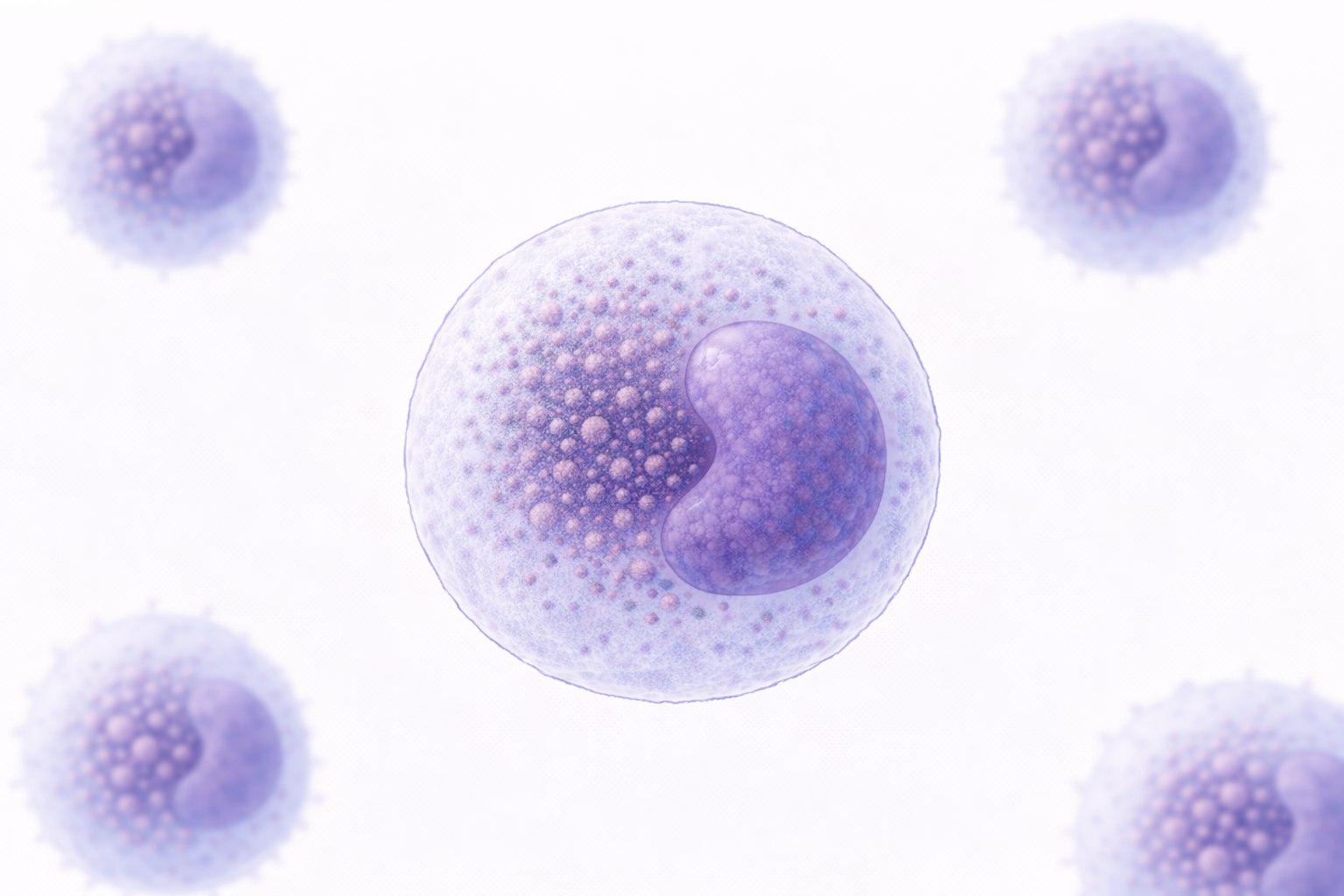
Image: Natural killer (NK) cells are large granular lymphocytes of the innate immune system. They contain cytoplasmic granules filled with cytotoxic proteins, such as perforin and granzymes, which enable them to recognise and destroy virus-infected and abnormal cells without prior sensitisation.
Beyond the Basics
Recognition Strategies: “Missing Self” and Stress Signals
NK cell activation depends on the integration of multiple surface receptor signals rather than a single on or off trigger. Inhibitory receptors recognise major histocompatibility complex class I (MHC I) molecules that are normally expressed on healthy nucleated cells, and engagement of these receptors delivers a strong suppressive signal that prevents inappropriate cytotoxicity. This inhibitory signalling is essential for self-tolerance, as it allows NK cells to remain in constant contact with host tissues without causing damage.
Activating receptors, on the other hand, respond to molecular patterns associated with cellular stress. These stress-induced ligands are upregulated when cells are infected, undergoing malignant transformation, or experiencing significant metabolic disruption. Many viruses and tumour cells reduce MHC I expression as a means of evading cytotoxic T lymphocytes, but this strategy removes the inhibitory brake on NK cells. When inhibitory input is reduced and activating signals accumulate, NK cells initiate cytotoxic killing, providing an early defence mechanism that operates before antigen-specific immunity is fully established.
Cytotoxic Mechanisms: Perforin and Granzymes
Once an NK cell commits to killing a target, cytotoxic granules are directed toward the immunological synapse formed between the NK cell and the abnormal cell. This focused interaction ensures that effector molecules are delivered precisely, limiting damage to neighbouring healthy tissue. The cytotoxic machinery used by NK cells closely parallels that of CD8⁺ cytotoxic T cells, reflecting their shared role in eliminating infected and malignant cells.
Perforin facilitates the entry of granzymes by forming transient pores in the target cell membrane. Granzymes then activate intracellular apoptotic pathways, leading to controlled programmed cell death rather than membrane rupture. This apoptotic process allows the immune system to remove dangerous cells efficiently while minimising inflammation, an important consideration in tissues such as the lungs, liver, and central nervous system.
Antibody-Dependent Cellular Cytotoxicity (ADCC)
NK cells also play a critical role in antibody-dependent cellular cytotoxicity, which represents a functional intersection between innate and adaptive immunity. When antibodies bind to antigens expressed on the surface of infected or malignant cells, they act as molecular bridges that link target recognition to NK cell activation.
NK cells express Fcγ receptors, particularly CD16, which bind to the Fc region of antibodies attached to target cells. Engagement of CD16 provides a strong activating signal that can override inhibitory input, resulting in NK cell degranulation and target cell death. This mechanism is especially relevant in clinical settings, as it underpins the therapeutic action of several monoclonal antibodies used in cancer treatment and immune modulation.
Cytokine Production and Immune Coordination
In addition to direct cytotoxic activity, NK cells exert broad immunomodulatory effects through cytokine secretion. Interferon-γ (IFN-γ) is a key cytokine produced by activated NK cells and plays a central role in macrophage activation, enhancement of antigen presentation, and shaping of T cell differentiation toward a type 1 immune response. Through these effects, NK cells help create an immune environment that favours effective control of intracellular pathogens and tumour cells.
NK cells also produce tumour necrosis factor-α and other inflammatory mediators that contribute to early immune activation and recruitment of additional immune cells. These cytokine-driven effects allow NK cells to influence the magnitude and quality of downstream adaptive responses, reinforcing their role as regulators as well as effectors within the immune system.
Interactions With Dendritic Cells and T Cells
NK cells engage in continuous cross-talk with dendritic cells, forming a regulatory loop that influences both innate and adaptive immunity. Dendritic cells stimulate NK cell activation through the release of cytokines such as IL-12, IL-15, and IL-18, which enhance NK cell cytotoxicity and cytokine production during early infection or tissue stress.
At the same time, NK cells contribute to immune regulation by selectively eliminating immature or poorly functioning dendritic cells. This process helps ensure that only optimally activated antigen-presenting cells proceed to prime T cells. NK cell-derived cytokines further support CD8⁺ T cell expansion and differentiation, strengthening coordinated antiviral and antitumour immune responses.
NK Cell Development and Circulation
NK cells originate from lymphoid progenitor cells in the bone marrow and develop under the influence of cytokine signalling rather than antigen-specific selection. Unlike T cells, they do not undergo thymic education, which reflects their reliance on innate recognition strategies rather than antigen receptor diversity. Once mature, NK cells circulate widely through the bloodstream and peripheral tissues, allowing for broad immune surveillance.
NK cell distribution is not uniform, with particularly high concentrations found in organs such as the liver, spleen, and uterus. In the uterus, NK cells adopt a specialised phenotype that supports placental development and vascular remodelling rather than cytotoxic defence. This functional adaptability highlights the diverse roles NK cells play across different physiological contexts.
Clinical Connections
Altered NK cell function has clear and clinically meaningful consequences, particularly in the context of viral infection and malignancy. Individuals with inherited or acquired NK cell deficiencies are highly susceptible to viral infections, most notably herpesviruses such as HSV, EBV, and CMV. This vulnerability reflects the central role of NK cells in early viral control, before antigen-specific T cell responses are fully established. In these patients, recurrent or unusually severe viral infections often occur despite otherwise intact adaptive immunity, highlighting the non-redundant role of NK cells in immune defence.
The mechanisms described in this article also help explain how many cancers evade immune surveillance. Tumour cells may manipulate NK cell signalling by suppressing activating ligands or enhancing inhibitory pathways, effectively restoring the inhibitory balance that prevents NK cell activation. This allows malignant cells to persist despite appearing abnormal. In some cancers, reduced NK cell infiltration or impaired cytotoxic function correlates with poorer prognosis, reinforcing the clinical importance of intact NK cell recognition and killing mechanisms.
Key clinical contexts where NK cell dysfunction or modulation is particularly relevant include:
Severe or recurrent herpesvirus infections associated with impaired NK cell cytotoxicity
Tumour immune evasion through altered expression of MHC I or NK cell activating ligands
Chronic viral infections in which prolonged immune activation leads to functional NK cell exhaustion
NK cells are also an active area of therapeutic interest, particularly in cancer immunotherapy. CAR-NK cell therapies aim to harness NK cell cytotoxicity while reducing some of the safety concerns seen with CAR-T cells, such as cytokine release syndrome. In chronic viral infections, sustained antigen exposure can lead to NK cell exhaustion, characterised by reduced cytotoxic capacity and altered cytokine production, which contributes to viral persistence. Dysregulated NK cell activity has also been implicated in certain autoimmune and inflammatory conditions, where inappropriate activation or impaired regulatory function may contribute to tissue damage or altered immune balance.
Concept Check
How do NK cells differentiate between healthy cells and infected or malignant cells?
What is the role of MHC I in regulating NK cell activation?
How do perforin and granzymes work together to induce apoptosis?
What is antibody-dependent cellular cytotoxicity (ADCC), and how do NK cells participate in it?
How do NK cells influence broader immune responses through cytokine production?