LACTEALS & CHYLE: How the Lymphatic System Absorbs Dietary Lipids in the Small Intestine
The lymphatic system plays a vital role in nutrient absorption, particularly the transport of dietary lipids. Within the small intestine, specialised lymphatic capillaries called lacteals absorb fat molecules that cannot directly enter the bloodstream. These fats are packaged into chylomicrons and transported through lymph as a milky fluid known as chyle. This process forms a key link between digestion and circulation, ensuring efficient absorption and distribution of lipids throughout the body.
What You Need to Know
Lacteals are specialised lymphatic capillaries located within the villi of the small intestine and play a central role in dietary fat absorption. While water-soluble nutrients such as glucose, amino acids, and electrolytes enter blood capillaries directly, lipids follow a distinct transport pathway because of their size and chemical properties.
During digestion, dietary fats are broken down into fatty acids and monoglycerides, absorbed by intestinal epithelial cells, and then reassembled into chylomicrons. Chylomicrons are large lipid-protein particles that are too big to enter blood capillaries, so they pass instead into nearby lacteals. Once inside the lymphatic system, this lipid-rich fluid is referred to as chyle.
Key features of this pathway include:
Selective absorption of large lipid particles into lacteals rather than blood vessels
Transport of chyle through intestinal lymphatic vessels and larger lymphatic channels
Delivery of dietary fats to the bloodstream via the thoracic duct
Initial bypass of hepatic processing before systemic distribution
This lymphatic route allows efficient transport of dietary fats and fat-soluble vitamins while preventing sudden lipid overload of the liver. After entering the bloodstream, chylomicrons deliver triglycerides to tissues such as skeletal muscle and adipose tissue for energy use or storage. Lacteals therefore link digestion, circulation, and lymphatic transport, supporting both nutritional uptake and metabolic balance.
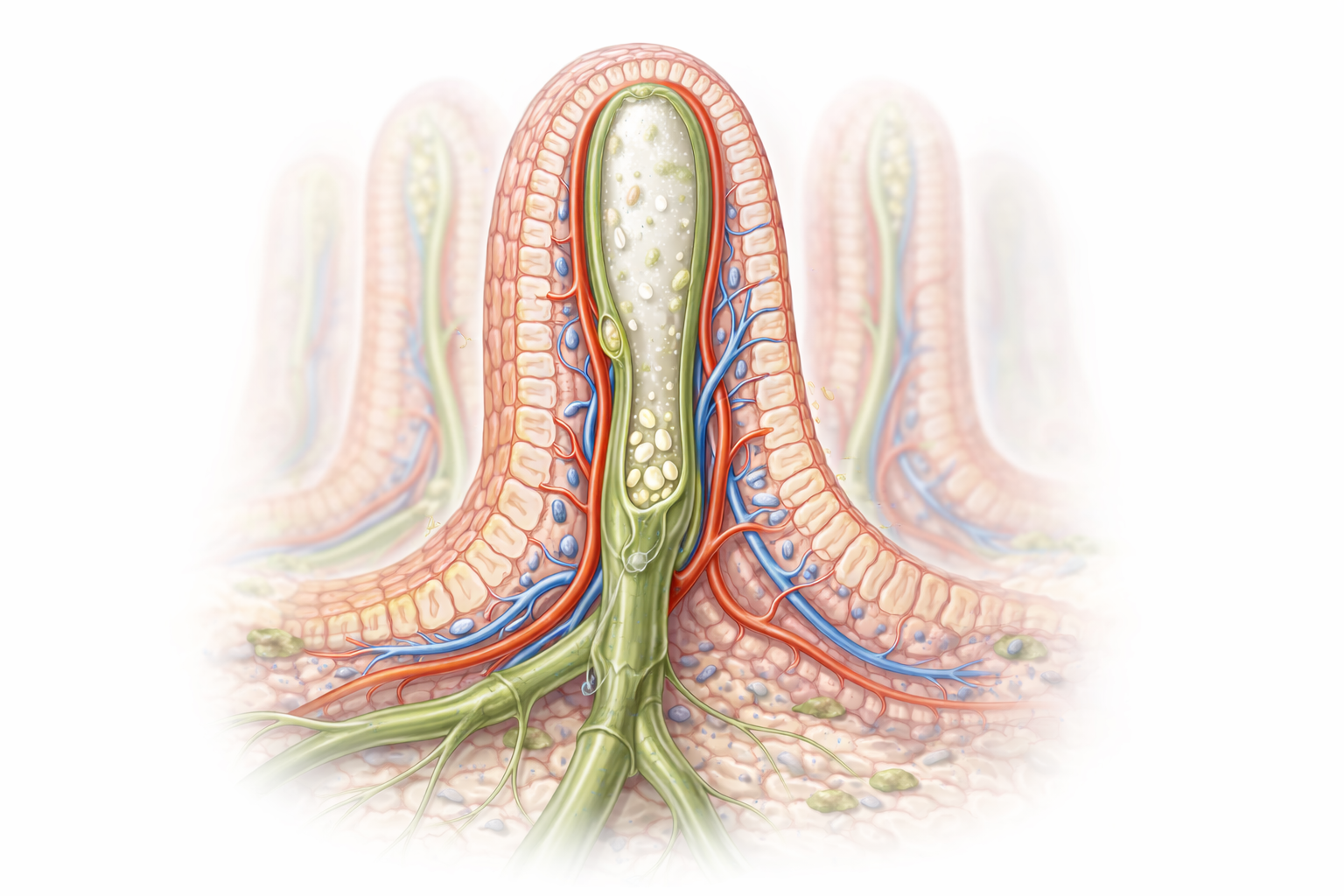
Image: Lacteals are specialised lymphatic capillaries located at the centre of intestinal villi. They absorb dietary fats in the form of chylomicrons, giving the lymph a milky appearance (chyle), and transport these lipids into the lymphatic system for delivery to the bloodstream.
Beyond the Basics
Structure and Location of Lacteals
Within each intestinal villus, nutrient absorption is divided between two closely positioned systems. A network of blood capillaries absorbs water-soluble nutrients, while a single central lymphatic vessel, the lacteal, handles lipid transport. Lacteals are blind-ended lymphatic capillaries with thin, highly permeable walls that allow entry of large lipid-containing particles that cannot pass into blood capillaries.
This structural arrangement ensures that different classes of nutrients are directed into the most appropriate transport pathway. The close proximity of blood capillaries and lacteals within the villus allows simultaneous absorption while maintaining separation between lipid and non-lipid transport.
Digestion and Packaging of Dietary Fats
Dietary lipid absorption requires several coordinated steps within the small intestine. Fats are first emulsified by bile salts, which break large fat droplets into smaller particles and increase surface area for enzyme action. Pancreatic lipase then hydrolyses triglycerides into fatty acids and monoglycerides.
These lipid components associate with bile salts to form micelles, small transport structures that move lipids through the intestinal lumen to the epithelial surface. Once inside intestinal epithelial cells, fatty acids and monoglycerides are reassembled into triglycerides. These triglycerides are packaged with cholesterol, phospholipids, and apolipoproteins to form chylomicrons, large lipoprotein particles designed for lipid transport.
Because chylomicrons are too large to cross blood capillary walls, they enter the more permeable lacteals instead.
Formation of Chyle
After entering lacteals, chylomicrons mix with lymph formed in the surrounding intestinal tissue. This lipid-rich lymph is known as chyle. Its milky appearance following meals reflects the high concentration of triglyceride-loaded chylomicrons.
Chyle typically contains:
Chylomicrons carrying dietary triglycerides
Water and electrolytes from interstitial fluid
Immune cells involved in gut surveillance
Small amounts of plasma proteins
The composition of chyle varies depending on dietary fat intake, increasing significantly after meals rich in lipids.
Transport of Chyle Through the Lymphatic System
From the lacteals, chyle flows into larger intestinal lymphatic vessels and then into the intestinal trunk. This trunk drains into the cisterna chyli, a dilated lymphatic reservoir located at the base of the thoracic duct. The thoracic duct then carries chyle upward through the thorax and empties it into the venous circulation at the left subclavian vein.
Once chylomicrons enter the bloodstream, enzymes such as lipoprotein lipase break down triglycerides, allowing fatty acids to be taken up by tissues. Skeletal muscle uses these fatty acids for energy, while adipose tissue stores them for later use.
Why Lipids Enter Lymph Instead of Blood
Routing dietary fats through the lymphatic system serves several important physiological purposes. Direct entry of large lipid particles into the portal circulation would overwhelm hepatic processing capacity and disrupt capillary flow. The lymphatic pathway allows lipid delivery to occur in a controlled and gradual manner.
This route provides several advantages:
Slower release of lipids into systemic circulation
Reduced immediate lipid load on the liver
Efficient delivery of energy substrates to peripheral tissues
Protection of blood capillaries from mechanical stress caused by large particles
By separating lipid transport from water-soluble nutrient absorption, lacteals support efficient digestion, metabolic balance, and circulatory stability.
Clinical Connections
Disruption of intestinal lymphatic function has significant nutritional and immunological consequences. Damage or obstruction of lacteals or downstream lymphatic vessels interferes with normal chyle transport, impairing absorption of dietary fats and fat-soluble vitamins. One example is intestinal lymphangiectasia, where dilated or damaged lymphatics leak lymph into the intestinal lumen, leading to fat malabsorption, protein loss, and lymphopenia.
Several clinical conditions are associated with impaired chyle transport:
Congenital malformations of intestinal lymphatic vessels
Infiltration or compression by lymphoma or other malignancies
Surgical or traumatic injury to abdominal lymphatics
Chronic inflammatory or fibrotic disease affecting lymphatic flow
When chyle cannot be transported effectively, patients may present with steatorrhoea, hypoalbuminaemia, oedema, and impaired immune function due to loss of lymphocytes and immunoglobulins.
Leakage of chyle into the thoracic cavity results in chylothorax, a serious complication most often seen after thoracic surgery, trauma, or malignancy involving the mediastinum. Accumulation of lipid-rich lymph in the pleural space compromises lung expansion and leads to nutritional depletion if ongoing losses are not addressed. Diagnosis is supported by milky pleural fluid with elevated triglyceride levels, reflecting the presence of chylomicrons.
Understanding lacteal function is also important in nutritional management. High-fat meals markedly increase chyle flow and lipid content, which may worsen symptoms in patients with lymphatic leakage or obstruction. In such cases, dietary modification, including reduced long-chain triglycerides and use of medium-chain triglycerides that enter the portal circulation directly, can reduce lymphatic load and support clinical management.
Concept Check
What are lacteals, and where are they located?
Why can chylomicrons enter lacteals but not blood capillaries?
What components give chyle its milky appearance?
How does chyle travel from the small intestine to the bloodstream?
Why is lipid absorption routed through the lymphatic system rather than directly into blood?